

How To Clean Up Wet Broken Glass
As an avid aquarist, Pete enjoys DIY projects and breeding various species of fish, peculiarly cichlids, nigh.
Learn how to refurbish old all-glass aquariums and make them as good as new.
Epitome created with Canva
Brand an Old Fish Tank Expect Like New
Knowing how to refurbish an all-glass aquarium is a good skill for whatever fish enthusiast to have. Have y'all ever found an former aquarium tucked away in a relative'south garage or attic or found a actually good deal on 1 at a garage auction or on Craigslist? If you're like me, you surely have. It's relatively easy to make these old aquariums like new and watertight with a little bit of endeavor.
Better the Safety, Too
Refurbishing old all-glass aquariums not merely serves to make them like new, but also makes sure that no toxins will be in the tank to leach dorsum into the water and kill the tank inhabitants. Aquariums that have been used to keep reptiles or past people who don't know that soap and other cleaning products shouldn't be used to make clean aquariums should always be resealed. It is a good do when the history of the aquarium is unknown.
How to Inspect the Aquarium
The aquarium should be inspected for chips or cracks in the glass. Pocket-sized chips that don't go past the thickness of the adjoining glass are of no business concern. The tanks that are the best candidates for refurbishing will have few, if any, of these small chips.
Larger chips that do become by the thickness of the adjoining glass could nowadays a problem and may atomic number 82 to a stress fracture when the aquarium is filled. It is best to supervene upon these panes with new drinking glass.
While this article won't cover replacing broken drinking glass, it is possible to salvage aquariums with one or more broken panes. That'due south a topic for another article, though. Refurbishing aquariums with broken glass should not exist attempted past a novice.
The frame of the aquarium should be inspected for cracks and adhesion to the aquarium glass. The status of the frame volition determine whether or non it needs to removed and/or replaced. If the frame is loose, it tin can exist removed and set aside to be reattached later. Don't attempt to pry information technology off if it doesn't disassemble easily.
Do You Need to Remove the Silicone That's Betwixt the Panes?
A common misconception nearly refurbishing all-drinking glass aquariums is thinking that all of the silicone sealant needs to be removed from between the glass panes. This is not necessary and strongly discouraged. But loose pieces of silicone between the glass should be removed if they exist. Most of the time, the silicone bond will still be intact between the drinking glass panes.
The silicone that needs to be removed is on the inside of the aquarium. Some silicone on the outside of the glass may take to removed if the frame needs to exist repaired, replaced, or reattached.
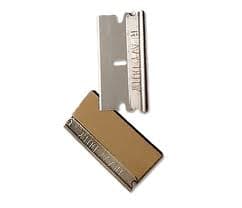
In that location are several tools and some supplies that are necessary for refurbishing an all-glass aquarium.
Tools
- Single edge razor blades
- Scraper
- Box cutter
- 5-in-1 painter's tool
- spray canteen
Supplies
- distilled white vinegar
- paper towels
- clean rags
- 100% silicone
Scroll to Continue
Read More than From Pethelpful
How to Prepare the Tank
A expert commencement to ready the all-glass aquarium to exist refurbished is to hose it out actually well with clean water. Make sure that the work area is clear of whatsoever rocks, pebbles, and other debris. Set the aquarium on one of the sides, so that the h2o can hands menses out.
Do not fill the aquarium with water then attempt to dump it out. Water is extremely heavy, and while aquariums can contain it any flexing tin crack the glass and possibly injure you.
Once the aquarium is hosed out, prepare it upright and pour a little distilled white vinegar in it. Use one of the make clean rags to clean the glass and frame with the vinegar. Distilled white vinegar is acidic breaks down hard h2o stains and other dirt off the glass. Rinse the rag with clean water then add together a trivial more vinegar to the aquarium. With some try, the aquarium should be sparkling clean.
Distilled white vinegar is used to clean the aquarium since it's easy to tell when there is no remainder left (the smell is gone), and it works actually well. Whatsoever rest dilutes to non-toxic levels when the aquarium is filled as well.
Cull a Soft Work Surface
In order to not damage the glass of the aquarium, information technology is all-time to have a make clean, soft work surface. A sturdy tabular array with a piece of carpet on elevation works well. The rug allows the aquarium to be easily moved and protects it as well.
How to Remove the Old Silicone
- Fill up the spray bottle with half distilled white vinegar, and half clean h2o then set it aside.
- The 5-in-one painter's tool makes removing the bulk of the old silicone very like shooting fish in a barrel. Employ the pointed edge in the corners to scrape out the former silicone. Don't worry about getting the movie that is left behind. The single edge razor blades and spray bottle will exist used to get that. Use the box cutter to cut the silicone pieces loose from the aquarium then discard them. Be sure not to force the border of the tool between the glass as chipping may occur.
- If the aquarium frame has been removed, scrape the silicone from the aquarium that held it in place. Be careful to hold the tool flat against the glass and not on an angle when close to the edge. The tool tin easily chip the edge of the glass. Scrape whatever silicone off of the aquarium frame as well.
- In one case the bulk of the silicone is removed, switch to the scraper with the unmarried edge razor blade in it. If the area of the aquarium y'all're working on is dry, use the spray canteen to dampen it. This makes it easier to find rest silicone and remove information technology with the razor bract.
- Proceed working until there is no more than silicone residue. This is very important as new silicone will Non bail to old cured silicone.
- One time all of the silicone is removed, wipe the aquarium inside and out with a clean rag dampened with distilled white vinegar. It is most likely that you'll discover some more silicone rest. Repeat the process until there's none left.
- Wipe the tank out with a clean rag and water. Rinse the rag equally needed and continue wiping out the aquarium until at that place is no hint of vinegar smell. Permit the aquarium to dry out for a few days.
How to Reseal the Aquarium
Resealing an aquarium requires some patience and finesse otherwise the result volition be less than desired. At that place are different techniques for resealing an aquarium. Some people cull to mask each pane with a rectangle of masking tape ane/2" from the adjoining pane. The tape is removed later the silicone is allowed to cure a curt amount of time. Some of the best resealers cull to employ the silicone freehand. Either way, here's a few tips to help with the process.
- Go along plenty of paper towels handy to wipe backlog silicone from your finger
- Use 1 continuous to spread the silicone and do not get over it once more
- Use a dewdrop appropriate to the aquarium size, but not more 1/four"
Step-by-Step Instructions
- Set the aquarium in such a way that all the seams are hands attainable from a comfortable position. Resealing tin exist difficult on the back if you have to bend over to reach into the aquarium.
- Mask the seal areas of the tank if desired.
- Place the silicone in the caulking gun, cut the tip on a slight angle slightly less than 1/4", then puncture the silicone cartridge if necessary.
- Run a bead of silicone around the bottom inside seams of the aquarium. Smooth each in one motion toward a corner. If you must, stop the motion, then reposition and restart the motion in the same place.
- Exist sure to wipe excess from your finger with the paper towels. This will aid prevent getting silicone where information technology doesn't belong.
- Run a bead in one corner from the bottom to nearly ane to two inches from the top of the aquarium. Pull the silicone up to the superlative of the aquarium while smoothing. The infinite left empty at the top should be covered by the excess silicone. Add a piffling if needed. Repeat in the other three corners.
- If you lot've masked the seal area, permit the silicone to cure for a few hours so remove the tape by pulling it slowly on an angle away from the seal. This should exit a make clean, professional-looking line.
Dealing With the Frame
If the top frame was removed, run a bead along the top of the glass then press the frame down on to the aquarium. Use masking record to secure the frame downward by placing a piece over the frame from 1 side of the drinking glass to the other. Check for excess and smooth information technology forth the frame.
If the elevation frame was not removed or if it was just reattached, run a bead along the underside of the frame, then smooth information technology.
If the aquarium has a glass brace, run a dewdrop under it where it joins the side adjoining drinking glass then smooth it.
Don't attempt to install the bottom frame now if it has been removed. It should be reattached after the aquarium seal has cured for 24 hours. Don't move the aquarium until this time has passed either. Reattach the bottom frame by running a dewdrop forth the bottom drinking glass border then reinstall the frame. The excess will press into the frame. Use masking tape pieces to secure the frame until it cures.
Curing and Cleaning Upwards
Allow the aquarium to cure for a minimum of v days, preferably seven, before examination filling it. Test filling should exist washed outside if possible, only in example your reseal didn't go so well. Make certain the aquarium is on a level surface and preferably on an aquarium stand. Fill up i/iv of the way and wait thirty minutes before filling to halfway. Wait another thirty minutes then fill the remaining half.
The greatest pressure is at the bottom of the aquarium, which is why information technology is suggested to take longer to fill the first one-half. Use a razor bract to clean any stray silicone from the glass.
If all goes well, bleed the aquarium, rinse it out a few times to be sure any residual vinegar is gone, then set it up in its location.
This content is authentic and true to the all-time of the author'southward knowledge and is not meant to substitute for formal and individualized advice from a qualified professional person.
Questions & Answers
Question: Wondering if you have advice for someone trying to actually remove one of the drinking glass panels? I got a couple of 40 gallon zilla tanks im trying to repurpose into terrariums and i demand to remove the front panel to make it into glass doors instead!
Answer: You tin can remove the silicone around the pane then use a razor blade to get between the glass. Applying very slight pressure level while doing that will permit you to go in between the drinking glass. VERY gently cut through the seal. Do not allow the glass to crimp down on the razor blade equally cracking tin can happen.
Question: How tin can you lot become the white residue off of the top an aquarium?
Respond: Distilled white vinegar will work most of the time.
© 2010 Nolapete
Nolapete (writer) from New Orleans, LA on June 23, 2020:
No, It is not safe to exercise that.
Ian Daft on June 22, 2020:
Is it rubber to stand in the tank as mine is very big, so i can go to the silicone
Nolapete (writer) from New Orleans, LA on May 27, 2019:
Every bit of silicone inside the tank has to be removed. Not from between the glass, but inside the tank. New silicone will absolutely not bond to one-time cured silicone. Information technology must be i contiguous bead that cures at the same time into ane solid seal. This is why removing a department of silicone near a leak or putting silicone over old silicone is pretty much 99.99% fail.
Robin on May 27, 2019:
practice I need to go all the silicone off or can I become over the trivial bit that is left if I comprehend it completely. the beads on the side are small and I'm thinking to do just the bottom completely and cover the sides that are already there. would this work?
Nolapete (writer) from New Orleans, LA on May fourteen, 2018:
Nigh of the time it serves ii purposes; cosmetic and to protect the edge of the glass. If at that place is a center caryatid, depending on the thickness of the drinking glass it can be structural. Replacement frames can be purchased from http://www.aquariumframeswholesale.com/retail. 55 gallon tanks are quite common, so they should accept a replacement.
Jeff on May 13, 2018:
I have a 55 gallon long that has been in storage for twenty years. The "frame" has crumbled. Is information technology for looks or is it structural? I would like to use this tank for a sump. Thanks
Nolapete (author) from New Orleans, LA on Apr 29, 2018:
A painter's 5 in i tool is what has get my goto. I'd clean off equally much silicone equally possible then work the tool betwixt the glass and frame a lilliputian at a time. Don't pry on information technology much or you risk great the frame. It have a lot of patience to become almost frames to release. Good luck.
Lecoeur on April 28, 2018:
Hey I have a 120 gallon tank and it was leaking from the top rim and I am having a difficult fourth dimension taking the rim off. It almost looks like it tin can't come off. Please help me out. Thanks
Nolapete (author) from New Orleans, LA on September 02, 2017:
You demand to sympathize that the silicone between the glass and the silicone on the inside of the tank are two separate parts of this. If the silicone between the glass is damaged, information technology is unlikely that the tank will be successfully resealed without taking it apart. Near of the time this is non the case. To answer your question, you must remove ALL of the inside the tank silicone to reseal the tank. Uncured silicone will not bond to cured silicone. The seal must exist contiguous and applied at ane time and allowed to cure for 72 hours minimum.
Partha Chakraborty on September 02, 2017:
Hi, you lot take mentioned nether "A common misconception":
A common misconception.........silicone sealant needs to be removed from between the glass panes. This is not necessary and strongly discouraged. Merely loose pieces of silicone between the glass should be removed if they exist. Most of the fourth dimension the silicone bond will still exist intact between the glass panes. The silicone that needs to be removed is on the inside of the aquarium. Again you have mentioned under "Removing Old Silicone" Continue working until there is no more silicone balance. This is very important every bit new silicone volition Non bond to onetime cured silicone.!!!!
And so which is correct?
Can I remove silicone from a office of the aquarium instead removing from the whole and apply new silicone? Besides can I apply second coat of silicone over the old silicone layer which I have applied 1 week ago?
Thanks,
Regards,
Partha Chakraborty on September 02, 2017:
Hi, you have mentioned under "A common misconception":
A common misconception.........silicone sealant needs to exist removed from between the glass panes. This is not necessary and strongly discouraged. Only loose pieces of silicone between the glass should exist removed if they exist. Most of the time the silicone bond will still be intact betwixt the glass panes. The silicone that needs to be removed is on the inside of the aquarium. Again you take mentioned nether "Removing Old Silicone" Keep working until there is no more silicone residue. This is very important as new silicone will NOT bond to erstwhile cured silicone.!!!!
Marion on February 16, 2015:
I simply removed my masking from the sides later on a few hours drying and it pulled the silicon with information technology! Went over the areas it pulled abroad from with more silicon in a panick! Help!
Lupe on September 07, 2014:
I found an old fish tank that was gently used in my attic and I wanted to use it. But I noticed that the drinking glass has kind of a layer of what looks like smudges or a white stains that don't come off, it doesn't wait like scratches but it refuses to come up off with just water. What can I employ to remove the smudges and bring back that clear polished look?
Nolapete (author) from New Orleans, LA on Jan 04, 2014:
A non gel type toothpaste and a cotton ball rubbed in round motions will assistance with small-scale scratches. Deeper scratches would likely require a jeweler'south material and whatever they use to polish with. Only the toothpaste method is safe to use inside the tank.
Nolapete (author) from New Orleans, LA on June 07, 2012:
As long as the silicone wasn't cured, y'all should be fine. Curing takes at least 24 hours. The only thing nigh going over information technology twice is that when it does cure it probably won't look very nice.
Amar Salvi from Republic of india on January 20, 2012:
Goodstuff,mate! Actually insightful.Didn't know nearly using distilled white vinegar.Thanks for sharing.
RichardCMckeown on August 31, 2011:
Astonishing... cheers for the tips.
destiny357 on Dec 01, 2010:
Practiced hub I give it a thumbs upwardly and useful.
Wendy Henderson from Cape Coral on December 01, 2010:
Very good information. :)
awesome77 on December 01, 2010:
I am new too, and the score ratio is baffling! Merely keep writing and meet what happens! Now i just write to make sure i make some money and requite my readers some useful info. Great hub in my book!
seanorjohn on December 01, 2010:
Don't worry about the score it will def become upwardly. Voted up and useful. This might help with the score.
minnow from Seattle on November xxx, 2010:
squeamish work! you know your subject well--I give it a useful & thumbs up.

Source: https://pethelpful.com/fish-aquariums/How-To-Refurbish-An-All-Glass-Aquarium
Posted by: jacksoninswer.blogspot.com
0 Response to "How To Clean Up Wet Broken Glass"
Post a Comment